menu


The nose serves three primary functions: to warm, humidify and filter air as it passes into the body. Breathing problems may impact one or multiple of these functions. Breathing problems can be temporary or chronic, mild or severe, but they usually increase with age. X-rays and CT scans may also be taken to get a visual picture of your breathing apparatus.
When an allergen enters the body, the immune system kicks in to counter to the effects. In most cases, the immune systems produces histamine, which causes the symptoms typically associated with allergies and hay fever: headaches, sneezing, watery or itchy eyes, nasal congestion and scratchy throat. Allergic substances range from pollens to environmental and chemical pollutants. Smoking can also contribute to nasal congestion. To treat allergies, most people need to reduce exposure to the allergen and take medication, often antihistamines and nasal decongestants. For more severe cases, allergy shots or allergy drops may be needed to build up the body’s immune response to the allergen over time.
The septum is the vertical structure that divides the two nasal passages in the nose. When the septum is crooked or bent, it is called a deviated septum, which can block the flow of air through the nose. If the constriction is serious, an outpatient surgical procedure can straighten out the septum and open the nasal airways.
Molds, dust and dry air are the most common culprits of environmentally induced allergies. These can be assessed by your doctor through physical examination and skin tests. If the allergic response is severe, your doctor may recommend allergy shots or allergy drops to build up an immunity to the allergens and alleviate your symptoms.
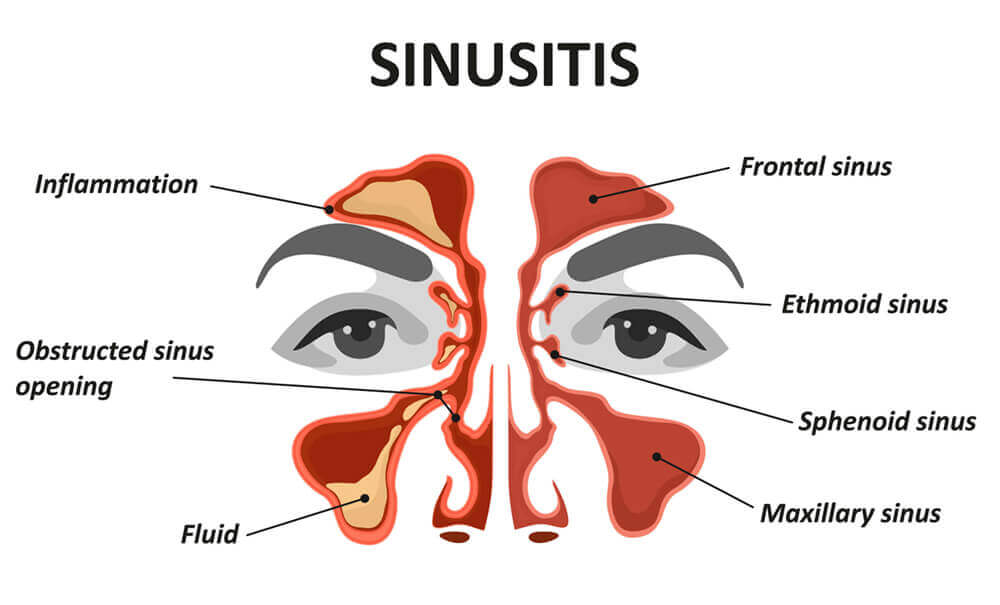
Sinusitis is an inflammation of the sinus tissue behind the upper cheeks on both sides of the nose, between the eyes and above the eyes. It is characterized by congestion and a feeling of pressure, sometimes in response to moving up and down. Sinus pressure can also cause watery eyes. Many over-the-counter medications suffice in treating mild sinusitis. For more serious cases, prescription medications may be required to alleviate the pain and pressure and open up the nasal passages. Occasionally, surgery is required to remove chronically inflamed sinus tissue.
If you’re experiencing persistent breathing problems, please contact our office and schedule an appointment with one of our Otolaryngologists.
Chronic sinusitis is an inflammation of the sinus lining lasting three months or more and is one of the most commonly diagnosed chronic illnesses. It is most commonly caused by bacterial, viral, and/or microbial infections. Structural issues such as blockage of the sinus opening can also lead to chronic sinusitis. If the opening is closed, normal mucus drainage may not occur. This condition may lead to infection and inflammation of the sinuses.
The painful symptoms associated with chronic sinusitis can be overwhelming. If symptoms are difficult to control with medications alone, your primary doctor may refer you to an Ear, Nose, and Throat (ENT) specialist, who can determine the best course of treatment, including further medication therapy or surgery to open the sinus passage ways.
If you are experiencing some of these symptoms you may be suffering from chronic sinusitis. Sinuses are air-filled pockets that surround the nose. Each sinus has an opening through which mucus drains. Chronic sinusitis sufferers do not experience the normal drainage which keeps the sinus healthy. Medications, allergy testing, In-Office Balloon Sinuplasty and/or conventional sinus surgery may help improve your symptoms.
Please refer to In-Office Balloon Sinuplasty and Sinus Surgery sections below for more information on the procedures.
In the past few years, a new minimally invasive treatment for Chronic Sinusitis sufferers has been introduced and has proven to be safe, effective, and is performed in the office.
We would like to introduce you to In-Office Balloon Sinuplasty. These products are endoscopic, balloon-based devices. This balloon procedure is used to dilate blocked sinuses and the sinuses can be directly cleaned with topical antibiotics. The sinuses are better able to drain and the bacteria are directly sterilized.
Now, there is an additional surgical option for treatment of blocked sinuses called Balloon Sinuplasty™ Technology. If you have been diagnosed with chronic sinusitis and are not responding well to antibiotics, you may be a candidate for surgery. Your surgeon now has a less invasive option that is clinically proven to be safe, effective and improve the quality of your life.
Balloon Sinuplasty™ Technology is an endoscopic, catheter-based system for patients suffering from sinusitis. The FDA-cleared technology uses a small, flexible, sinus balloon catheter to open up blocked sinus passageways, restoring normal sinus drainage. When the sinus balloon is inflated, it gently restructures and widens the walls of the passageway while maintaining the integrity of the sinus lining.
While use of any surgical instrument involves some risk, clinical research has indicated the Balloon Sinuplasty™ System to be safe and effective in improving symptoms of sinusitis.
The technology uses small, soft, flexible devices that enter entirely through the nostrils. These devices gently open blocked sinus openings, and in many cases, without tissue or bone removal.
Because in many instances no tissue or bone is removed when using this technology, there may be little bleeding associated with the procedure.
While recovery time varies with each patient, many people can quickly return to normal activities.
This technology is an endoscopic tool and may be used with other medical therapies or sinus surgery techniques. It does not limit future treatment options if you have progressive disease.
Step 1. Gain Access to the Sinus. To gain initial sinus access, the sinus guide catheter is introduced into the nasal cavity to target the sinus ostia under endoscopic visualization. The sinus guidewire or the sinus illumination system is introduced through the sinus guide catheter and gently advanced into the target sinus.
Step 2. Inflate Balloon Across Ostium. The sinus balloon catheter is introduced over the sinus guidewire or sinus illumination system and positioned across the blocked ostium. The position of the sinus balloon catheter is confirmed and the balloon is gradually inflated to open and remodel the narrowed or blocked ostium.
Step 3. Remove Balloon and Irrigate Sinus. The sinus balloon catheter is then deflated and removed. The irrigation catheter is advanced over the sinus guidewire or sinus illumination system into the target sinus. The sinus is then irrigated, flushing tenacious sinus contents – like pus and mucus.
Step 4. Remove System. The irrigation catheter is removed, leaving the ostium open and the sinus cleared of mucus allowing the return of sinus drainage. There is little to no disruption to mucosal lining.
Ask your ENT doctor if you are a candidate for In-Office Balloon Sinuplasty.
RhinAer is a non-surgical treatment for patients with difficulty breathing through their nose. RhinAer can treat both runny noses and congestion.
It’s designed for patients with chronic rhinitis. Chronic rhinitis is a common condition that millions have but are often undiagnosed. Chronic rhinitis symptoms include a constantly runny nose, persistent post-nasal drip, always feeling stuffed up, and excessive sneezing.
Before your RhinAer treatment, your ENT specialist at Specialty Care Institute will apply local anesthesia to numb the inside of your nose to ensure you don’t feel any pain and are comfortable. Then, they will insert the small RhinAer wand into your nostril.
The wand uses low-temperature radiofrequency (RF) energy from the tip. The radiofrequency energy targets and calms down overactive nerves in your nose, which helps reduce the production and flow of unwanted mucus being created.
In addition to calming down overactive nerves, RhinAer can also shrink any inflamed soft tissue in the nose. Doing this helps relieve congestion, making you feel more comfortable.
Once your RhinAer treatment is complete, you can return to your usual activities since there’s minimal downtime. However, each patient is different, so your results may vary.
RhinAer’s console can also be used with the VivAer Stylus for patients with nasal airway obstruction. Combining RhinAer and VivAer provides lasting relief to these patients by treating the entire nasal valve.
RhinAer is best suited for patients suffering from chronic rhinitis symptoms. You may be a good candidate for RhinAer if:
RhinAer is only for use by adults who are at least 22 years of age and older.
If this sounds like you, you may be a good candidate for RhinAer. However, the only way to know for sure is to schedule a consultation with your ENT specialist at Specialty Care Institute!

From a clinical study, 96% of RhinAer patients reported improved or eliminated symptoms a year after treatment. 88% of patients had improved chronic rhinitis symptoms in a two-year follow-up.
This demonstrates that results from RhinAer are long-lasting and are helping patients get the relief they need from chronic rhinitis. However, results may vary by patient.
Most RhinAer patients will see the full effect of the treatment within four weeks of undergoing RhinAer. You may experience temporary congestion, increased sensitivity, and crusting where you receive treatment for 2 to 6 weeks after treatment.
These are signs that your nasal passage is healing. For the best results, avoid blowing your nose for the first week after your RhinAer treatment, and use any recommended nasal sprays and rinses as directed by your ENT specialist.
Are you ready to find out if you could be a good candidate for RhinAer? Schedule your consultation at Specialty Care Institute at one of our five convenient locations today!
Do you suffer from nasal congestion that hasn’t responded well to medication? Are you looking for a solution that doesn’t involve surgery? VivAer may be an option that will provide you with the relief you need with a non-invasive office-friendly treatment now offered at Specialty Care Institute.

VivAer is a non-invasive procedure that helps reduce nasal airway obstruction (NAO) in patients struggling to breathe. VivAer treatment delivers long-lasting relief from the frustrating symptoms that come with nasal airway obstruction, like congestion, reduced airflow, finding it challenging to exercise, difficulty sleeping, or frequent mouth breathing.
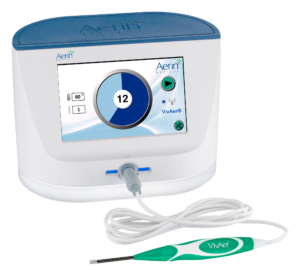
During a VivAer treatment at Specialty Care Institute, your ENT specialist will begin by applying anesthesia to numb the inside of your nose. After numbing your nose, they insert a small wand into your nostril.
The wand precisely and accurately targets the blockage to treat it efficiently. The tip of the wand uses low-temperature radiofrequency (RF) energy.
Radiofrequency energy helps rebuild your nasal passage in any areas of obstruction to improve airflow in and out of your nose. VivAer is a single-solution, minimally invasive procedure that treats the entire nasal valve.
It increases nasal valve radius to improve airflow and shrinks the inferior turbinate submucosal tissue while reducing soft tissue obstruction on the septum. During VivAer, you will experience minimal discomfort.
There is no lengthy recovery period, allowing you to return to your usual routine almost immediately.
Yes. Clinical studies have shown that after receiving VivAer, patients continued experiencing relief four years after treatment. In a follow-up study, patients experienced improvements across a broad set of quality of life (QOL) measures.
On the NOSE Scale (nasal congestion, nasal blockages, difficulty breathing, trouble sleeping, and inability to get enough air while exercising), patients saw improvements across all 5 QOL measures.
Do you struggle with congestion that over-the-counter medications haven’t helped? Have you undergone other surgical procedures to improve your breathing without success?
The only way to know if you’re a good candidate for VivAer is to schedule an appointment at Specialty Care Institute. However, you can take two simple tests in the meantime to get a better understanding.
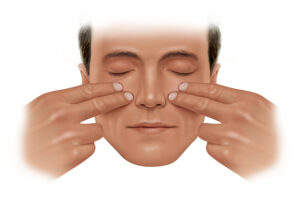
For this test, start by placing two fingertips on your cheeks. Your fingertips should be on each side of your nose. Next, gently press and pull out to further open your nasal passages.
While continuing to hold your fingers in place, breathe through your nose. Did doing the Cottle’s Maneuver help you improve your breathing? If this is the case, you may be a good candidate for VivAer.
Fill out the NOSE Score to determine if you may benefit from VivAer treatment. If you have a NOSE Score of 55 or higher, this indicates that you have moderate to severe nasal airway obstruction. Patients with this level of obstruction are often excellent candidates for VivAer.
Are you ready to start breathing better? Schedule an appointment at Specialty Care Institute at one of our five convenient locations to learn more about VivAer, and if it’s a treatment you may benefit from.
Sinus Surgery is one of the most common operations performed. Our ENT Doctors will review with you whether this procedure is the appropriate procedure to open possible sinus obstructions. Removal of such obstructions may require eliminating polyps that are blocking sinus openings or possibly enlarging the hole that sinuses drain through.
Sinuses are the empty pockets that are filled with air in the head. There are actually four pairs of sinuses within your skull. These circulate air while lubricating the nose. This keeps the sinuses free of bacteria, dirt, and other particles. Mucosa lines the sinuses and secretes mucus which traps particles from incoming air. These dust particles are then expelled via cilia, small hair like fibers. Sinuses that are in good health are not obstructed or clogged. Mucus is able to pass through into the nose and then the throat without problems.
Colds, allergies, infections or other obstructions of the sinuses (i.e. deviated septum) can cause inflammation of the mucosa and block the drainage of the sinus cavities. If the sinuses become inflamed, Sinusitis can occur. The mucosa becomes thicker and cannot pass through the openings and end up accumulating in the sinuses. Many symptoms can arise including fever, headaches, and pain over and underneath the eyes. Polyps form when mucosa becomes swollen by repeated infections.
Our Doctors will determine if you have sinusitis during your examination. Your doctor will examine your ear, nose and throat and determine the cause of your sinusitis. Diagnosis can occur with the help of a CT scan in order to see the sinuses within your skull. Blood or allergy tests may also be performed. Treatment may be based upon the cause of your infection. Obstructions caused by allergies can be minimized or eliminated by treating the allergy. Sometimes humidifiers, warm compress over your sinuses, or drinking lots of fluids (which thins out your mucus) can also alleviate symptoms. Medications including antibiotics can treat an infection in the sinuses and control the condition. Repeated sinusitis may be caused by an obstruction and will be most responsive to surgery.
Surgery can be performed in a number of ways. It’s possible that the walls between sinuses are removed to make the sinuses larger. When the sinuses are larger, there is less of a chance for obstruction to occur. Sometimes new openings are created in the sinuses for better drainage in the operating room under general anesthesia. If an obstruction is caused by a deviated septum, surgery can help straighten it out. Many of these options are performed endoscopically and under general anesthesia. Patients usually are treated and go home the same day.
Sinus surgery is a very common procedure and helps treat sinus disorders. There are some rare risks, which should be discussed during your visit with the doctors. Your doctor will explain possible complications to help you better understand your treatment options.
Please refer to After Nasal/Sinus Surgery for post-operative instructions.